Skip to content
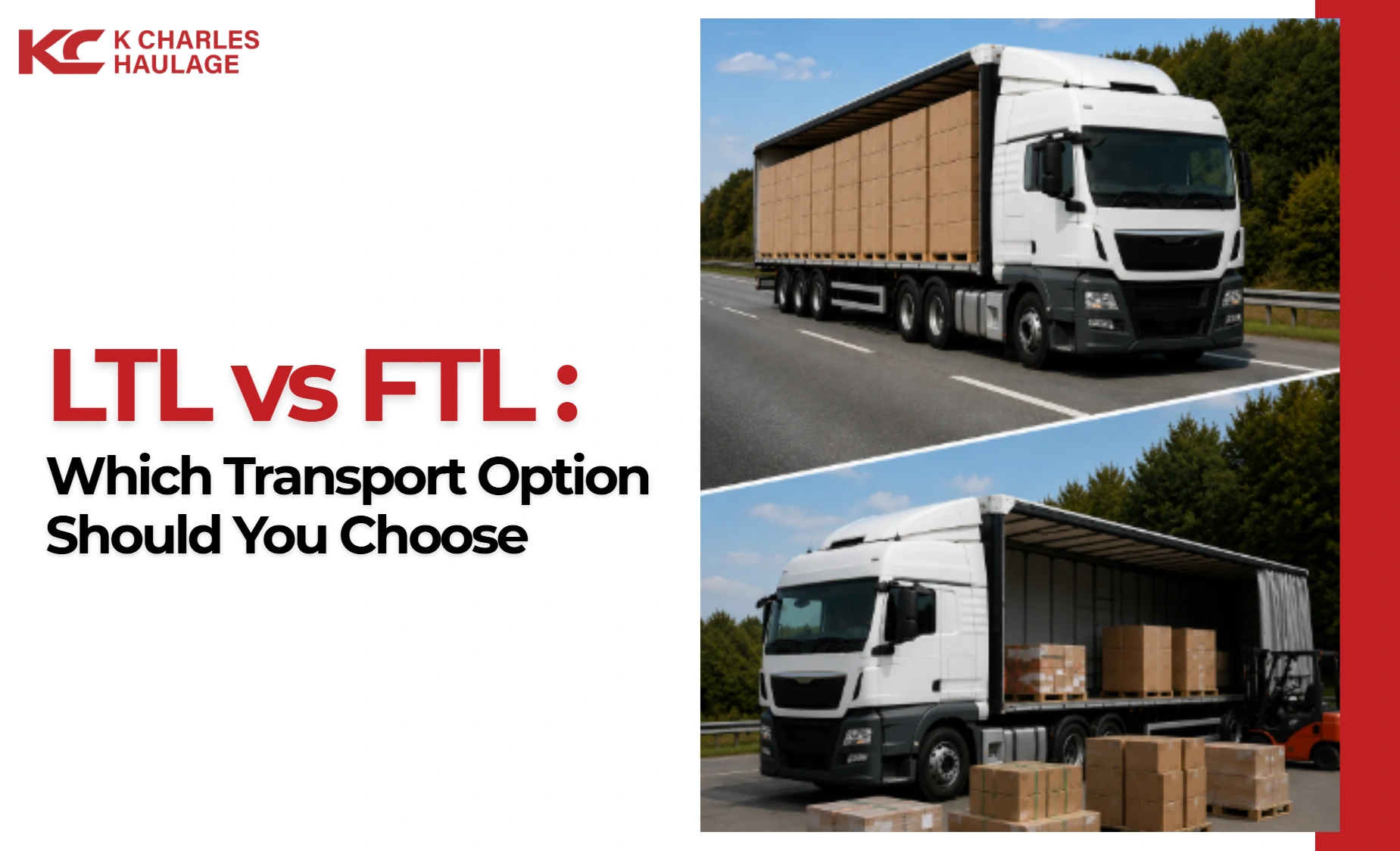
Choosing between Less-Than-Truckload (LTL) and Full-Truckload (FTL) transport depends on shipment size, urgency, handling needs, and cost priorities. LTL transport is a freight shipping method where multiple shippers share trailer space, whereas FTL transport dedicates an entire truck to a single shipment. LTL is designed for smaller freight volumes that do not require full trailer capacity, whereas FTL is better suited to large shipments, high-value cargo, and freight requiring direct transportation. LTL involves multiple handling points and terminal transfers, whereas FTL moves freight directly from origin to destination with minimal handling.
When comparing key characteristics, LTL provides shared trailer space for smaller shipments, whereas FTL offers dedicated trailer capacity for larger loads. LTL is commonly used for cost-sensitive and non-urgent freight, while FTL is preferred for time-sensitive, fragile, or high-value cargo. In addition, FTL is generally faster and safer because freight travels directly to its destination with minimal handling, whereas LTL involves multiple stops, transfers, and handling points.
What is Less-Than-TruckLoad (LTL) Transport?
Less-than-truckload (LTL) transport is a freight shipping method that allows multiple businesses to share space on the same truck, with each shipper paying only for the portion of the trailer their goods occupy. It is commonly used for shipments that are too large for parcel delivery services but not large enough to require a dedicated truck.
In an LTL shipment, a carrier consolidates freight from multiple customers into a single vehicle to maximise trailer capacity and improve transportation efficiency. LTL transport is often a cost-effective option for businesses shipping moderate freight volumes, as it allows them to access professional freight services without paying for an entire trailer.
How Does LTL Transport Work?
LTL transport works by consolidating shipments from multiple shippers into a single truck, allowing each customer to pay only for the space their freight occupies. The process begins when freight is collected and transported to a terminal, where the carrier groups shipments heading to different destinations to maximise trailer utilisation and improve transportation efficiency.
The LTL process works as follows:
- First, the carrier collects the freight from the shipper and transports it to a local terminal.
- Once the shipment arrives at the terminal, it is consolidated with freight from other customers heading toward similar destinations.
- After consolidation, the freight is loaded onto a shared trailer to maximize vehicle capacity and transportation efficiency.
- The shipment then moves through the carrier’s terminal network, where it may be sorted and transferred between trucks as needed.
- As the freight approaches its destination, it is routed to the nearest delivery terminal for final processing.
- Finally, the shipment is delivered to the recipient along a shared local delivery route.
What is Full TruckLoad (FTL) Transport?
Full Truckload (FTL) transport is a shipping method where an entire truck is dedicated to a single customer’s shipment. Unlike Less-Than-Truckload (LTL) shipping, FTL shipping does not share trailer space with other shippers, allowing freight to travel directly from origin to destination.
FTL transport is commonly used for large shipments, palletised goods, bulk freight, and time-sensitive or high-value cargo that requires minimal handling. Because the shipment remains on one vehicle throughout the journey, FTL shipping offers faster transit times, fewer delivery stops, and a lower risk of damage. This makes it a suitable option for businesses that require direct, reliable, and efficient freight transportation.
How Does FTL Transport Work?
FTL transport works by loading a single shipper’s freight onto a dedicated truck that travels directly to the destination without sharing space with other shipments. The process starts when the shipper prepares and loads goods onto the trailer, which can be partially or fully occupied depending on the shipment size.
The FTL process works as follows:
- First, the shipper prepares and loads the freight onto a dedicated trailer.
- Once the truck is fully loaded and ready for dispatch, the shipment begins its journey to the destination.
- After departure, the truck follows a direct transportation route without consolidating freight from other shippers.
- Because the shipment remains on the same vehicle throughout transit, no terminal transfers or cross-docking are required.
- As the truck approaches its destination, the freight is transported directly to the delivery location without intermediate handling.
- Finally, the shipment is unloaded and delivered to the recipient.
What are the main differences between LTL and FTL Transport?
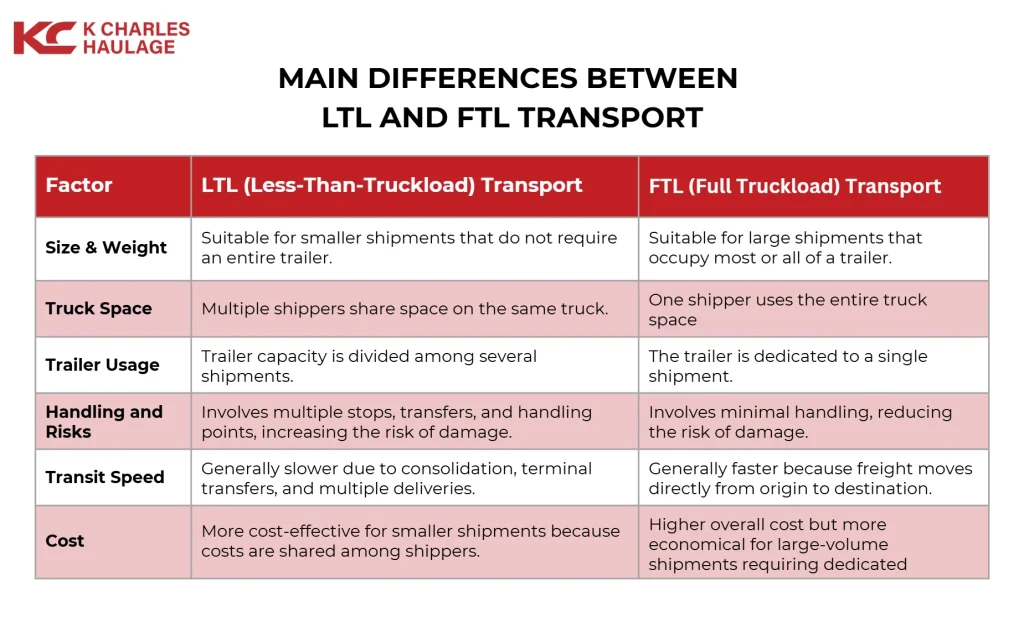
LTL transport is a shipping method where multiple shippers share space on the same truck, whereas FTL transport dedicates an entire truck to a single shipper’s freight. This distinction affects shipment size requirements, trailer usage, handling levels, transit times, and shipping costs.
Below are the main differences between LTL and FTL transport:
| Factor | LTL (Less-Than-Truckload) Transport | FTL (Full Truckload) Transport |
| Size & Weight | Suitable for smaller shipments that do not require an entire trailer. | Suitable for large shipments that occupy most or all of a trailer. |
| Truck Space | Multiple shippers share space on the same truck. | One shipper uses the entire truck space. |
| Trailer Usage | Trailer capacity is divided among several shipments. | The trailer is dedicated to a single shipment. |
| Handling and Risks | Involves multiple stops, transfers, and handling points, increasing the risk of damage. | Involves minimal handling, reducing the risk of damage. |
| Transit Speed | Slower due to consolidation, terminal transfers, and multiple deliveries. | Faster because freight moves directly from origin to destination. |
| Cost | More cost-effective for smaller shipments because costs are shared among shippers. | Higher overall cost but more economical for large-volume shipments requiring dedicated transport. |
- Size & Weight
LTL transport is designed for smaller shipments ranging from 1 to 6 pallets and weighing up to 10,000 pounds, whereas FTL transport is intended for larger shipments that utilise most or all of a trailer with load capacities of up to 44,000 pounds. In comparison, LTL allows multiple shipments to share trailer space when freight volumes are lower, while FTL provides dedicated trailer capacity for a single shipment. This distinction is important because pallet count, weight limits, and load capacity help determine whether freight is better suited to LTL or FTL transportation.
- Truck Space
In terms of truck space allocation, LTL transport shares truck space among multiple shippers, whereas FTL transport reserves the entire truck for a single shipper. LTL allows several shipments to occupy different portions of the same trailer, with each shipper using only the space required for their freight. In contrast, FTL dedicates the entire trailer to a single shipment, regardless of whether the trailer is partially or fully loaded. As a result, LTL offers greater flexibility for varying shipment sizes, while FTL provides more control over vehicle availability and delivery scheduling.
- Trailer Usage
Trailer usage in LTL transport supports businesses that ship smaller freight volumes frequently, whereas FTL transport is better suited to large shipments to a single destination. An LTL trailer can accommodate freight from multiple customers, making it practical when shipments do not require a full trailer. FTL, on the other hand, allocates the entire trailer to one load, making it suitable for businesses moving larger quantities of freight. This difference allows shippers to match transportation capacity to their shipment requirements more effectively.
- Handling & Risk
LTL involves multiple shipments within the same trailer, resulting in more handling throughout the transportation process, whereas FTL keeps a single shipment on one dedicated truck with minimal handling. Shipment size, handling requirements, shipment frequency, risk tolerance, and freight characteristics all influence the choice between the two methods. These differences help businesses select a transport solution that aligns with their cargo requirements, operational preferences, and freight management needs.
- Transit Speed
When transit speed is a key consideration, LTL transport involves multiple stops and terminal transfers, whereas FTL transport moves freight directly to its destination on a dedicated truck. In comparison, LTL uses a shared transportation network in which freight is consolidated with other shipments, whereas FTL offers a more direct route with fewer interruptions. Understanding these differences helps shippers determine whether LTL or FTL is better suited to their freight movement needs.
- Cost
From a cost perspective, LTL transport costs about $50 to $500+ per shipment because expenses are shared among multiple shippers, whereas FTL transport ranges from $1,000 to $5,000+ per shipment since an entire trailer is dedicated to a single customer’s freight.LTL is often preferred when freight occupies only a portion of a trailer, while FTL becomes more practical for large-volume loads requiring dedicated transport. In addition, LTL and FTL differ in documentation, insurance requirements, and provider coordination, making compliance and carrier relationships important considerations when selecting a shipping method.
When Should You Use LTL Shipping?
You should use LTL shipping for smaller freight shipments that do not fill an entire truck, particularly when managing cost-sensitive freight, non-urgent deliveries, or regular small-volume shipments. By sharing trailer space with other shippers, businesses can move freight efficiently without requiring dedicated truck capacity for every shipment.
Choose LTL shipping under the following conditions:
- Smaller freight shipments: Use LTL shipping for shipments that do not require dedicated trailer space. Request a quote, confirm shipment details, and maintain clear communication with the carrier throughout pickup, transit, and delivery.
- Freight that does not fill a full truck: Choose LTL services when freight occupies only part of a trailer and does not require exclusive vehicle use. This option works well for palletised goods, partial consignments, and other loads that do not justify a full truck.
- Cost-sensitive shipments: Consider LTL shipping when controlling transportation costs is a priority. Compare quote elements such as base rates, fuel surcharges, and additional service fees to identify the most suitable option for your shipment.
- Non-urgent deliveries: Select LTL shipping for non-urgent deliveries where transit speed is not the primary concern. Evaluate whether specialised requirements, such as temperature-controlled or hazardous goods transport, influence the choice between LTL and FTL.
- Regular small-volume freight movement: Use LTL shipping for recurring small-volume freight movements that occur on a regular schedule. Weekly pallet shipments, routine stock replenishment, and ongoing supply runs often fit this transportation model well.
When Should You Use FTL Shipping?
You should use FTL shipping for large freight shipments, high-value cargo, fragile freight, time-sensitive deliveries, or loads that require limited handling and direct transportation. By dedicating an entire truck to a single shipment, FTL transport enables freight to move directly from origin to destination with fewer handling points, making it well-suited to shipments that require greater control, security, and delivery reliability.
Choose FTL shipping under the following conditions
- Large freight shipments: Use FTL shipping for freight volumes that occupy most or all of a trailer. Dedicated trailer capacity helps accommodate larger loads without sharing space with other shipments.
- High-value cargo: Choose FTL shipping for shipments that require greater control. Keeping freight on a dedicated truck can help reduce unnecessary handling throughout the journey.
- Fragile freight: Select FTL shipping for fragile freight that benefits from limited movement and handling. This approach helps maintain shipment integrity from pickup to delivery.
- Time-sensitive delivery: Consider FTL shipping when meeting strict delivery schedules is a priority. Direct transportation allows freight to move without the additional stops associated with shared freight networks.
- Freight that needs limited handling: Use FTL shipping when cargo requires minimal handling during transit. Fewer loading, unloading, and transfer points help maintain consistent freight conditions.
- Direct point-to-point transport: Choose FTL shipping when freight needs to move directly from origin to destination. Dedicated transportation provides a straightforward shipping process with a single shipment occupying the trailer.
Which is Faster LTL or FTL Transport?
FTL transport is faster than LTL transport because freight moves directly from the pickup location to the destination without intermediate stops or shipment transfers. A dedicated truck carries a single shipment throughout the journey, reducing transit delays and handling requirements. In contrast, LTL transport combines freight from multiple shippers, requiring additional pickups, deliveries, and terminal transfers before reaching the final destination. These extra handling points can extend transit times compared to FTL shipping. For businesses with time-sensitive freight, FTL is generally the preferred option due to its faster and more predictable delivery schedule.
Which is Safer LTL or FTL Transport?
FTL transport is safer than LTL transport because the shipment remains on a single truck from origin to destination, reducing handling and transfer points. In contrast, LTL freight passes through multiple terminals and is loaded and unloaded more frequently, increasing the risk of damage or misplacement. For high-value, fragile, or sensitive goods, FTL is often preferred due to greater shipment control and reduced handling.