Skip to content
Cold chain logistics is a temperature-controlled supply chain system that manages product preparation, pre-cooling, storage, thermal protection, transportation, tracking, excursion management, and final delivery verification. It uses specific temperature ranges, including controlled room temperature at 15°C to 25°C, refrigerated conditions at 2°C to 8°C, frozen conditions typically at -25°C to -10°C, ultra-low temperatures around -80°C to -60°C, and cryogenic temperatures below -150°C, depending on the product’s requirements, to preserve the stability of temperature-sensitive products. Advanced technologies such as IoT sensors, GPS systems, automated alerts, refrigeration equipment, temperature-controlled packaging, AI analytics, and blockchain traceability improve monitoring, visibility, and product protection throughout the supply chain.
Beyond temperature control and monitoring, cold chain logistics maintains product quality, reduces risks, and supports the safe distribution of food, pharmaceuticals, vaccines, biologics, chemicals, and biological samples. It relies on storage, transportation, packaging, handling, inventory management, quality control, and compliance processes while addressing challenges such as temperature excursions, equipment failures, and delays through practices like monitoring, route optimisation, and staff training.
How Does Cold Chain Logistics Work?
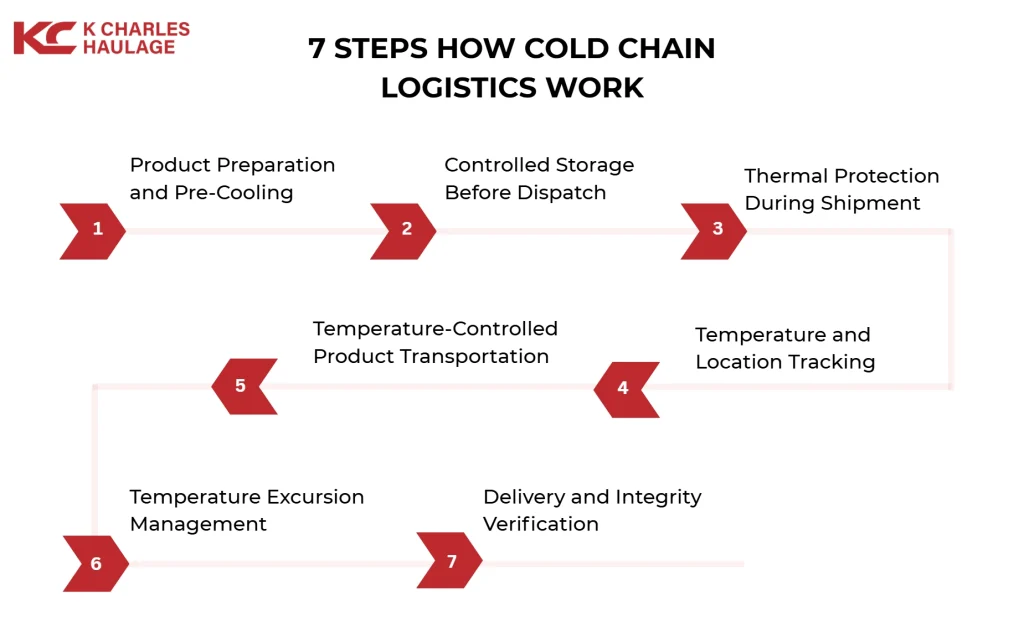
Cold chain logistics works by pre-cooling products, storing them under controlled conditions, protecting them during shipment, transporting them with temperature control, tracking conditions, managing temperature excursions, and verifying delivery integrity. This process maintains product quality, prevents temperature-related damage, and ensures temperature-sensitive goods reach their destination safely.
Here is how cold chain logistics work:
- Product Preparation and Pre-Cooling
In the first step, lower the goods to their required storage range before packing or loading them into transit containers, and pre-condition thermal packaging components or Phase Change Materials (PCMs) to the correct target setting. This stage removes excess heat from products and prepares them for controlled temperature conditions. Proper pre-cooling establishes a stable temperature foundation, enabling the subsequent stages of cold storage, thermal protection, and transportation to maintain product quality and integrity.
- Controlled Storage Before Dispatch
After products reach the required temperature through pre-cooling, they are moved to controlled storage facilities before dispatch. Store goods in temperature-mapped, climate-controlled warehouses or walk-in chillers/freezers before dispatch, adhering strictly to UK temperature thresholds such as chilled goods kept at or below 8°C and pharmaceuticals maintained strictly between 2°C and 8°C. This step matters because fluctuations in a holding warehouse break the chain early, reducing shelf life, enabling bacterial growth, and undermining compliance mandates like HACCP or GDP.
- Thermal Protection During Shipment
Once products leave controlled storage, thermal protection maintains their required temperature throughout shipment. Temperature-controlled packaging, including insulated containers, gel packs, dry ice, and phase change materials, creates a protective environment around products. By providing continuous temperature insulation, thermal protection helps products move safely from storage facilities to transportation systems while limiting exposure to external temperature fluctuations.
- Temperature-Controlled Product Transportation
Following thermal protection, transfer goods using specialized refrigerated vehicles or ATP-certified transport equipment equipped with calibrated cooling units while planning efficient routes that account for UK urban constraints like Clean Air Zones and London’s ULEZ.During refrigerated transport, packaging protection works with monitoring systems to maintain stable conditions and keep products safe throughout distribution.
- Temperature and Location Tracking
During transportation, temperature and location tracking systems continuously monitor shipment conditions using IoT sensors, GPS trackers, and data loggers. These technologies record temperature, humidity, and location information to provide real-time visibility. This monitoring process connects transportation activities with risk management by identifying environmental changes before they affect product quality.
- Temperature Excursion Management
When monitoring systems detect temperature deviations, temperature excursion management identifies and controls potential risks within the cold chain process. Trigger immediate corrective action protocols if a sensor reports temperatures drifting outside safe parameters, quarantining affected stock upon arrival to document the deviation root cause via a Corrective and Preventive Action (CAPA) framework. This step matters because strict excursion management ensures that compromised, unsafe, or ineffective products like spoiled food or degraded vaccines never make it to consumers or NHS facilities.
- Delivery and Integrity Verification
After transportation is completed, delivery and integrity verification confirm that the products maintained proper conditions throughout the entire cold chain journey. Teams review temperature records, monitoring data, and shipment documentation to verify product quality. This final stage ensures that temperature-sensitive products reach their destination safely while maintaining product integrity, compliance, and customer requirements.
What Are The Temperature Ranges in Cold Chain Logistics?
Cold chain logistics uses different temperature ranges, including ambient conditions of 15°C to 25°C, cool conditions of 8°C to 15°C, chilled conditions of 2°C to 8°C, frozen conditions of -16°C to -20°C, ultra-low temperatures of -60°C to -80°C, and cryogenic conditions below -150°C. These ranges help protect different products by maintaining their required storage and transportation conditions.
Below are the 6 temperature ranges in cold chain logistics:
- Ambient: 15°C to 25°C
The ambient temperature range of 15°C to 25°C is used for products that remain stable under controlled room-temperature conditions. This range prevents exposure to extreme heat or cold while maintaining product quality during storage and transportation. Products that do not require refrigeration often maintain their stability under ambient conditions.
- Cool: 8°C to 15°C
Certain pharmaceuticals and temperature-sensitive materials are stored in the cool temperature range of 8°C to 15°C to maintain stability and slow degradation. This range provides controlled cooling that offers more protection than ambient conditions while avoiding the need for colder refrigeration environments. It helps preserve product quality during storage and transportation.
- Chilled: 2°C to 8°C
Products such as vaccines, insulin, biologics, and other pharmaceutical materials are stored at 2°C to 8°C to maintain their effectiveness and stability. By maintaining this controlled refrigeration range, cold chain systems slow degradation processes, protect product integrity, and ensure temperature-sensitive goods remain safe during storage and transportation.
- Frozen: -16°C to -20°C
Perishable products such as frozen food, meat, and seafood are stored at temperatures between -16°C and -20°C to prevent spoilage and maintain product quality during storage and transportation. Maintaining these freezing conditions reduces microbial activity, preserves product integrity, and supports safe distribution throughout the cold chain supply network.
- Ultra-Low: -60°C to -80°C
Highly temperature-sensitive products, such as biological samples, advanced biologics, and mRNA vaccines, require ultra-low-temperature storage between -60°C and -80°C for extreme cold preservation and long-term stability. These ultra-low conditions slow degradation, preserve product integrity, and support the safe storage and transportation of sensitive materials.
- Cryogenic: Below -150°C
Advanced biological materials such as stem cells, cell therapies, and other sensitive biomaterials are stored at cryogenic temperatures below -150°C for extreme preservation and long-term storage. Cryogenic conditions preserve cellular viability, maintain structural stability, and support the safe handling of highly temperature-sensitive materials during storage and transportation.
What Are The Core Technologies And Tools Used in Cold Chain Logistics?
Cold chain logistics uses advanced technologies and tools such as IoT sensors, data loggers, GPS and telematics systems, automated alert systems, refrigerated transport equipment, and temperature-controlled packaging to monitor conditions and maintain temperature control. It also uses ultra-low cryogenic freezers, warehouse management systems, AI predictive analytics, and blockchain traceability systems to improve visibility, manage operations, and protect temperature-sensitive products throughout the supply chain.
9 core technologies and tools that are used in cold chain logistics are:
- IoT Sensors and Data Loggers
IoT sensors and data loggers are critical monitoring devices that measure and record environmental conditions such as temperature, humidity, and shock during cold chain operations. These devices provide continuous tracking and record critical shipment conditions in real time, helping supply chain managers quickly identify minor environmental variations that could otherwise compromise product integrity and safety before spoilage occurs.
- GPS and Telematics Systems
GPS and telematics systems combine location tracking and vehicle data monitoring to provide visibility into cold-chain transportation activities. By tracking vehicle routes, movement patterns, and operational conditions in real time, they help logistics teams manage deliveries, identify delays, and improve transportation efficiency.
- Automated Alert Systems
For identifying temperature deviations and managing shipment risks, automated alert systems are digital monitoring solutions that detect abnormal conditions and generate immediate notifications when shipment parameters exceed predefined limits. Real-time warnings allow logistics teams to respond quickly, manage temperature excursions, and reduce the risk of product damage during transportation.
- Refrigerated Transport Equipment
Refrigerated transport equipment consists of specialised vehicles and containers fitted with refrigeration units that maintain controlled temperatures during product movement. Through continuous temperature regulation, refrigerated trucks, containers, and trailers support the safe distribution of food, pharmaceuticals, and biological materials across different supply chain routes.
- Temperature-Controlled Packaging
When products require protection from external temperature changes during shipment, temperature-controlled packaging uses insulated materials and cooling components such as gel packs, dry ice, and phase change materials to maintain stable internal conditions. Its protective design helps preserve product quality and maintain product integrity throughout transportation and last-mile delivery.
- Ultra-Low Cryogenic Freezers
Ultra-low cryogenic freezers are specialised storage systems designed to maintain extremely cold environments for products requiring advanced preservation. Operating at ultra-low temperatures, these freezers support the long-term storage of vaccines, biological samples, and cell therapies that require strict temperature conditions.
- Warehouse Management Systems
Within cold storage operations, warehouse management systems are software platforms that coordinate inventory control, storage activities, and warehouse processes. These systems organise product records, track inventory movement, support FIFO and FEFO practices, and improve visibility across refrigerated storage facilities.
- AI Predictive Analytics
For identifying patterns, predicting operational risks, and improving cold chain planning, AI predictive analytics uses artificial intelligence and historical operational data to analyse supply chain conditions. This technology helps businesses forecast temperature failures, optimise transportation routes, and make data-driven decisions that improve supply chain reliability.
- Blockchain Traceability Systems
Blockchain traceability systems create secure digital records that document product movement, handling activities, and custody changes throughout the cold chain. By maintaining transparent, tamper-resistant records, blockchain technology enhances traceability, supports regulatory compliance, and builds trust among supply chain stakeholders.
Why Does Cold Chain Logistics Matter?
Cold chain logistics matters because it protects product quality, maintains vaccine effectiveness, prevents spoilage, reduces temperature-related losses, supports safe distribution, ensures regulatory compliance, and lowers the risk of product recalls. It helps temperature-sensitive products maintain their stability and integrity throughout storage, transportation, and delivery.
10 key benefits of cold chain logistics are:
- Keeps Vaccines Effective Until Use: Provides controlled temperature management for vaccines during storage and transportation to maintain their stability and potency. Proper monitoring prevents temperature deviations that can reduce effectiveness and ensures vaccines remain safe until administration.
- Prevents Food From Spoiling Early: Maintains suitable temperature conditions for perishable food products throughout storage and distribution. Consistent refrigeration slows microbial growth, preserves freshness, and reduces spoilage that can affect food safety.
- Extends Shelf Life During Distribution: Supports longer product usability by maintaining stable environmental conditions throughout the supply chain. Controlled temperatures slow degradation, preserve product characteristics, and help temperature-sensitive goods remain suitable during extended distribution.
- Reduces Losses From Temperature Damage: Monitors product conditions to identify and control temperature risks during transportation and storage. Effective temperature management reduces spoilage, prevents product damage, and minimises financial losses from rejected shipments.
- Protects High-Value Biologics in Transit: Provides specialised temperature control for high-value biologics during transportation and handling. Advanced refrigeration systems and monitoring technologies preserve product stability, protect therapeutic value, and reduce risks caused by temperature fluctuations.
- Preserves Product Quality Across Handoffs: Maintains consistent product conditions during transfers between manufacturers, warehouses, and transportation providers. Continuous monitoring and controlled handling reduce quality issues and protect product integrity throughout supply chain operations.
- Lowers Waste From Rejected Shipments: Helps prevent shipment rejection by keeping products within required temperature ranges. Accurate monitoring, documentation, and temperature control reduce damaged goods, lower waste, and protect inventory value.
- Supports Safe Long-Distance Distribution: Enables reliable movement of temperature-sensitive products across extended transportation routes. Refrigerated vehicles, thermal packaging, and tracking systems maintain product quality during regional and international distribution.
- Helps Meet Regulatory Storage Requirements: Supports compliance with industry storage standards by maintaining controlled conditions and accurate temperature records. Proper documentation and monitoring processes help businesses meet regulatory requirements for sensitive products.
- Reduces Risk of Product Recalls: Strengthens product safety by maintaining required conditions from storage through final delivery. Traceability systems, quality checks, and temperature monitoring help identify risks early and reduce recall-related losses.
What Are The Core Components of Cold Chain Logistics?
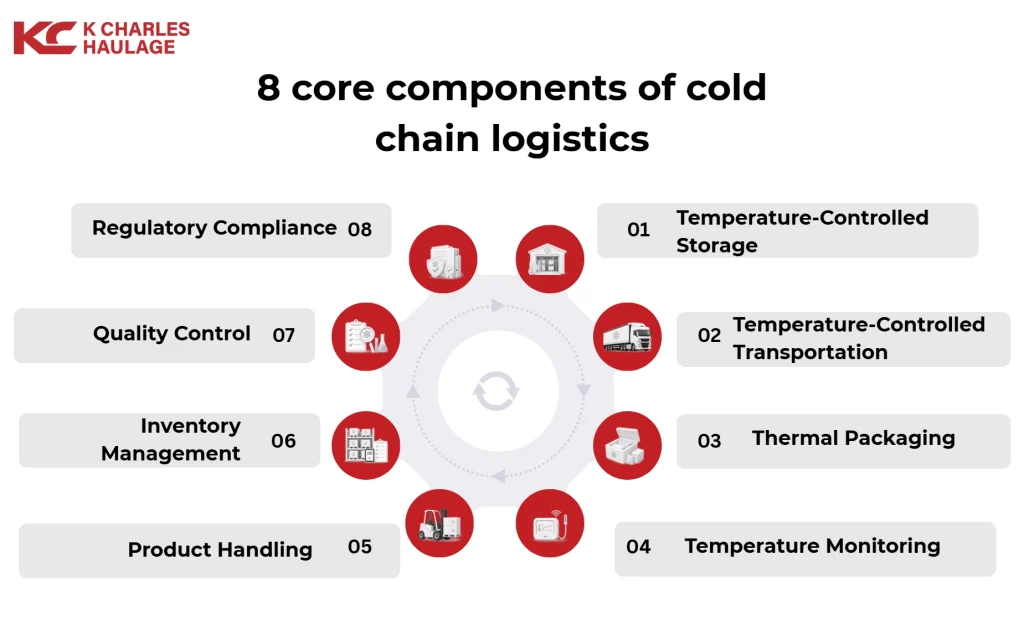
The core components of cold chain logistics include temperature-controlled storage, temperature-controlled transportation, thermal packaging, temperature monitoring, product handling, inventory management, quality control, and regulatory compliance. These factors work together to maintain stable conditions, prevent temperature-related risks, and preserve the quality and integrity of temperature-sensitive products throughout the supply chain.
8 core components of cold chain logistics are:
- Temperature-Controlled Storage
Temperature-controlled storage refers to refrigerated warehouses and cold storage facilities that maintain specific temperature conditions for sensitive products before distribution. It completes cold chain logistics by preserving product stability, preventing spoilage, and ensuring goods enter transportation with the required temperature conditions.
- Temperature-Controlled Transportation
For maintaining required temperature conditions during product movement, temperature-controlled transportation uses refrigerated trucks, containers, and specialised transport systems equipped with refrigeration units. Maintaining controlled conditions during transit allows temperature-sensitive goods to move safely between storage facilities and delivery points.
- Thermal Packaging
Thermal packaging includes insulated containers, protective packaging materials, and cooling solutions such as gel packs, dry ice, and phase change materials designed to maintain product temperatures during shipment. These packaging systems support cold chain operations by reducing exposure to external temperature changes and preserving product integrity throughout transit.
- Temperature Monitoring
When temperature-sensitive products move through storage and transportation stages, temperature monitoring uses IoT sensors, data loggers, and environmental monitoring systems to track and record conditions throughout the supply chain. Continuous tracking provides real-time visibility, identifies temperature deviations, and helps protect product quality.
- Product Handling
Product handling encompasses the procedures for loading, unloading, transferring, and storing temperature-sensitive products within cold chain operations. Proper handling practices reduce unnecessary temperature exposure, prevent human errors, and maintain product quality during every stage of movement.
- Inventory Management
During cold storage operations, inventory management involves organising, tracking, and controlling temperature-sensitive products stored within cold chain facilities. Effective inventory control improves product visibility, supports FIFO and FEFO practices, and reduces losses caused by expired, damaged, or improperly stored products.
- Quality Control
Quality control includes inspection procedures, monitoring records, and verification processes that maintain product standards throughout cold chain operations. These measures identify potential quality issues, confirm compliance with required conditions, and ensure products meet safety and performance expectations before reaching end users.
- Regulatory Compliance
To maintain industry standards and meet storage requirements, regulatory compliance requires adherence to documented processes and guidelines governing temperature-sensitive products. Proper documentation, quality assurance protocols, and accurate records help cold chain operations maintain safe product handling and meet regulatory expectations.
Which Products Require Cold Chain Logistics?
Products that require cold chain logistics include frozen food, fresh produce, dairy products, meat and seafood, pharmaceuticals, vaccines, blood and blood products, biological samples, chemicals, flowers, and cosmetics. These products need controlled temperature conditions to prevent degradation, maintain quality, and ensure safety throughout storage, transportation, and distribution.
11 products that require cold chain logistics are:
- Frozen food
Frozen food, including ready meals, frozen vegetables, pastries, and ice cream, requires refrigerated transport between -18°C and -25°C to maintain quality, texture, and food safety. Consistent freezing conditions prevent thawing, reduce ice crystal damage, and preserve product integrity, while deep-frozen exports require temperatures as low as -30°C for long-distance transportation.
- Fresh produce
Fresh produce such as berries, leafy greens, tomatoes, and tropical fruits requires refrigerated transportation between +2°C and +12°C to maintain freshness and quality. Proper temperature control reduces respiration, moisture loss, and spoilage, while tropical fruits like bananas require +13°C to +15°C to prevent chilling injury.
- Dairy products
Dairy products such as milk, cream, butter, yoghurt, and cheese rely on refrigerated transport between +1°C and +5°C to preserve freshness, maintain food safety, and prevent bacterial growth. Their high protein and fat content creates an ideal environment for harmful bacteria when temperatures rise above the recommended range.
- Meat & seafood
Beef, poultry, pork, fish, and shellfish spoil quickly at higher temperatures, making refrigerated transport essential to maintain −1°C to +2°C for fresh meat, 0°C to +2°C for fresh seafood, and −18°C or below for frozen products. These products contain high moisture and nutrients that create ideal conditions for bacterial growth when temperature control is lost.
- Pharmaceuticals
Temperature-sensitive pharmaceuticals such as insulin, injectable medicines, and biologics require refrigerated transportation between +2°C and +8°C to maintain stability during distribution. Controlled temperatures prevent active ingredient degradation, freezing damage, and help meet MHRA Good Distribution Practice (GDP) requirements for pharmaceutical storage.
- Vaccines
Vaccines require refrigerated transport between +2°C and +8°C to preserve their potency and ensure they remain safe and effective until administration. Exposure to excessive heat degrades biological components, while accidental freezing damages vaccine formulations and reduces their effectiveness.
- Blood and blood products
Blood and blood products require refrigerated transportation between +2°C to +6°C to maintain safety and suitability for transfusion during distribution. Proper temperature control preserves whole blood, plasma, and blood components, while frozen plasma requires sub-zero temperatures to maintain its biological properties.
- Biological samples
Accurate laboratory testing begins with refrigerated transport that maintains biological samples between +2°C and +8°C or as low as −80°C for specialised specimens. Tissue samples, blood specimens, pathology materials, and clinical trial samples degrade through enzymatic activity and cellular breakdown when exposed to unsuitable temperatures.
- Chemicals
Temperature-sensitive chemicals such as laboratory reagents, industrial chemicals, adhesives, and catalysts require controlled transportation between +2°C and +8°C or +15°C and +25°C to maintain stability during transit. Proper temperature management prevents degradation, evaporation, and chemical reactions, supports SDS storage requirements, and preserves chemical composition.
- Flowers
Cut flowers and ornamental plants require refrigerated transportation between +2°C and +8°C from harvest to delivery to maintain freshness and appearance. Controlled cooling reduces respiration, moisture loss, premature blooming, and dehydration while preserving colour, fragrance, and vase life until final delivery.
- Cosmetics
Premium skincare products, perfumes, and beauty formulations benefit from refrigerated transport between +8°C and +15°C or controlled room temperatures of +20°C to +25°C to preserve their formulation. Active ingredients such as vitamin C, retinol, and botanical oils deteriorate when exposed to excessive heat or freezing conditions.
What Are The Common Challenges of Cold Chain Logistics?
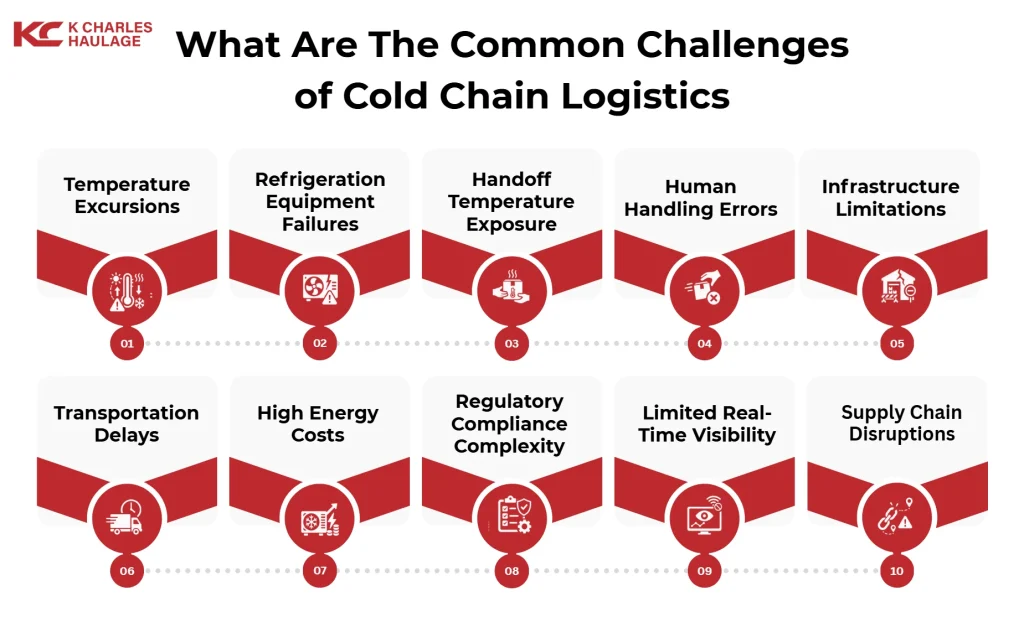
Common challenges of cold chain logistics include temperature excursions, equipment failures, handling errors, transportation delays, high costs, compliance issues, limited visibility, and supply chain disruptions that can affect product safety and quality. These errors can lead to product damage, increased waste, operational delays, and difficulties in maintaining required temperature conditions throughout the supply chain.
10 common challenges of cold chain logistics are:
- Temperature Excursions: Temperature excursions create challenges in cold chain logistics when products are exposed to conditions outside their required temperature range due to delays, equipment issues, or handling problems. These variations can reduce product quality, damage sensitive goods, and affect compliance.
- Refrigeration Equipment Failures: Refrigeration failures affect cold chain operations when cooling systems cannot maintain required temperatures. This can result in product damage, storage issues, and shipment losses.
- Handoff Temperature Exposure: Handoff exposure occurs when products are exposed to temperature changes during transfers between storage facilities, vehicles, or supply chain partners. These short exposures can compromise product integrity and quality.
- Human Handling Errors: Human errors impact cold chain performance when staff do not follow proper handling procedures. Improper loading, unloading, or storage practices can lead to temperature risks and product losses.
- Infrastructure Limitations: Limited cold storage facilities, transport capacity, or refrigeration infrastructure can restrict cold chain operations. These gaps can create distribution challenges and reduce the reliability of temperature control.
- Transportation Delays: Delays during transportation can increase the time products spend in transit. Longer journeys can raise temperature risks and affect the quality of temperature-sensitive goods.
- High Energy Costs: High energy costs challenge cold chain operations because refrigeration systems require continuous power to maintain controlled conditions. Increased energy use can raise operational expenses.
- Regulatory Compliance Complexity: Meeting different storage standards, documentation rules, and industry regulations can make cold chain management more complex. Poor compliance can create safety risks and operational issues.
- Limited Real-Time Visibility: Lack of real-time monitoring makes it difficult to track temperature, location, and shipment conditions. Limited visibility can delay responses to potential cold chain problems.
- Supply Chain Disruptions: Unexpected events such as transport failures, supplier delays, or infrastructure issues can interrupt cold chain operations. These disruptions can delay deliveries and increase the risk of product loss.
What Are The Best Practices in Cold Chain Logistics?
Best practices in cold chain logistics include pre-chilling cargo, pre-cooling transport units, inspecting refrigeration systems, using suitable packaging, monitoring conditions, setting alerts, integrating tracking systems, optimising routes, training staff, auditing carriers, and selecting experienced, refrigerated transport providers. These practices reduce temperature risks, improve supply chain reliability, and help protect temperature-sensitive products throughout storage and transportation.
11 best practices in cold chain logistics are:
- Pre-Chill Cargo Before Loading: Initial cargo cooling reduces the product temperature to the required level before transportation begins. This practice prevents temperature shock, supports stable conditions during transit, and reduces the risk of product damage.
- Pre-Cool Transport Units: Refrigerated unit preparation before shipment ensures that trucks, containers, and other transport equipment reach the required temperature before products are loaded. It maintains consistent internal conditions and prevents temperature exposure during transportation.
- Inspect Refrigeration and Backup Systems: Cooling system inspections and backup equipment checks ensure refrigeration units operate correctly before shipment movement. Regular maintenance identifies potential failures, prevents temperature disruptions, and supports reliable cold chain operations.
- Match Packaging to Transit Conditions: Selecting suitable thermal packaging solutions ensures packaging materials meet shipment requirements and environmental conditions. Proper insulation, gel packs, dry ice, and phase change materials help maintain product stability throughout transportation.
- Monitor Temperature and Humidity Continuously: Continuous environmental tracking of temperature and humidity provides visibility into product conditions during storage and transportation. Real-time monitoring detects variations early, supports corrective actions, and protects temperature-sensitive goods.
- Configure Real-Time Excursion Alerts: Setting up immediate temperature deviation notifications allows logistics teams to receive alerts when conditions move outside required limits. These alerts support quick responses, reduce product risks, and improve management of temperature excursions.
- Integrate Tracking With Warehouse Systems: Connecting shipment tracking technology with warehouse management platforms improves coordination between transportation and storage operations. This integration increases visibility, supports inventory accuracy, and strengthens cold chain control.
- Optimise Routes to Reduce Delays: Improving transportation route planning helps reduce delays and limits unnecessary transit time for temperature-sensitive products. Efficient routes support stable conditions, lower risks, and improve delivery performance.
- Train Staff on Handling Protocols: Providing employee training on cold chain handling procedures ensures staff follow correct practices during loading, unloading, and product transfers. Proper training reduces human errors, limits temperature exposure, and protects product quality.
- Audit Carriers for Cold Chain Compliance: Evaluating transport providers through compliance audits verifies that carriers adhere to required temperature-control procedures and industry standards. Regular assessments identify operational gaps and improve transportation reliability.
- Choose an Experienced Refrigerated Transport Provider: Selecting a specialised refrigerated logistics partner ensures access to suitable equipment, trained professionals, and proven cold chain practices. Experienced refrigerated providers maintain temperature control, support compliance, and deliver sensitive products safely.