Skip to content




Container haulage is the transportation of shipping containers between ports, depots, warehouses, distribution centres, and customer locations, supporting the movement of containerised freight across domestic and international supply chains. The main types of container haulage are road, rail, drop-and-collect, wait-and-load, standard, and specialised. The process involves booking the service, collecting the container, transporting and tracking the shipment, delivering the cargo, and returning the empty container after unloading.
Businesses use container haulage services for container collection, delivery, transport planning, handling, full load transport, and domestic and European freight movements. It supports the movement of consumer goods, food products, machinery, chemicals, and other cargo across sectors such as retail, manufacturing, construction, energy, and healthcare. While container haulage offers cost-effective, secure, and flexible transport solutions, factors such as port congestion, driver shortages, and customs delays can affect operations. For businesses moving containerised freight across the UK and European supply chain, container haulage remains a reliable and efficient logistics solution.
What Are the Main Types of Container Haulage?
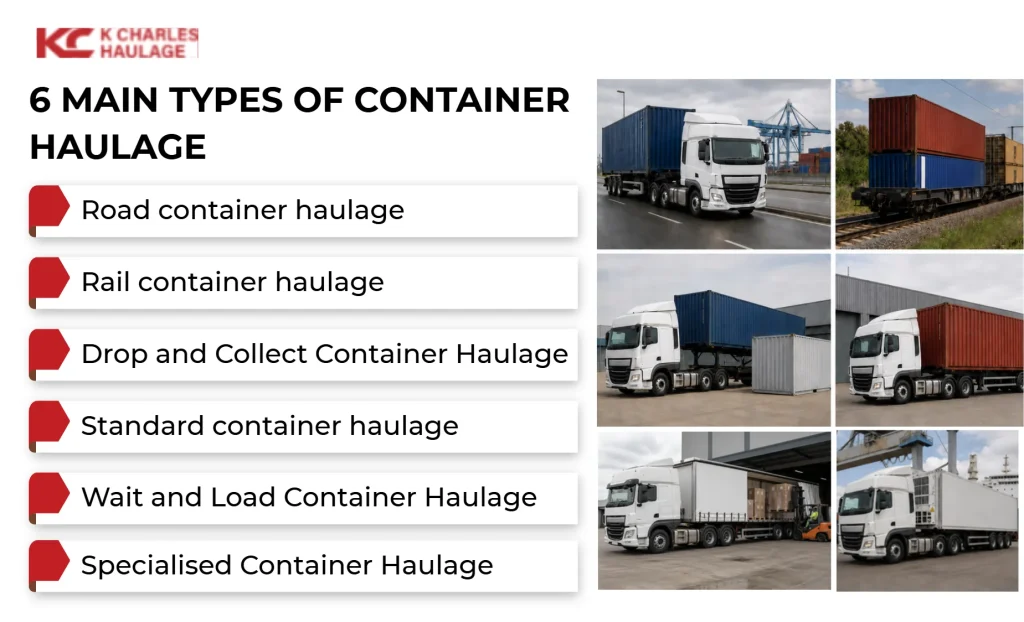
The main types of container haulage are road, rail, drop-and-collect, standard, wait-and-load, and specialised. Each service serves different transport and logistics requirements, helping businesses move shipping containers efficiently based on cargo, delivery schedules, and operational needs.
6 main types of container haulage include:
- Road container haulage
Road container haulage involves transporting shipping containers by truck between ports, warehouses, depots, and customer premises. It is the most widely used form of container transportation because it provides direct door-to-door delivery and flexible routing options. This service can accommodate various cargo types, including oversized goods and time-sensitive shipments. Road container haulage also connects ports with rail terminals and distribution centres, making it a vital part of the logistics network. Businesses often choose this option when they require reliable, secure, and efficient transportation with quick turnaround times.
- Rail container haulage
Transporting containers by train offers an efficient solution for moving large quantities of freight over long distances. Rail haulage is widely used between ports, inland freight terminals, and distribution hubs where high-capacity transport is required. This method helps reduce pressure on road networks and can lower transport emissions compared to road-only freight services. Rail container haulage often forms part of an intermodal logistics system, allowing containers to transfer seamlessly between trains, trucks, and ships while maintaining cargo security and operational efficiency.
- Drop and Collect Container Haulage
By providing an empty container for loading and collecting a loaded container during the same visit, drop-and-collect container haulage helps businesses manage freight operations more efficiently. This service is particularly valuable for warehouses, manufacturers, and distribution centres with varying loading schedules. By reducing vehicle waiting times and ensuring containers are available when needed, drop-and-collect haulage supports continuous cargo movement. Companies that handle frequent container shipments often choose this option because it improves logistics planning and helps maintain a steady flow of goods within the supply chain.
- Standard container haulage
Standard container haulage refers to the transportation of standard-sized shipping containers, including 20-foot and 40-foot containers, using conventional trucks and trailers between ports, warehouses, distribution centres, and business premises. It is intended for the movement of general cargo that can be transported using standard container equipment without additional handling requirements. Businesses commonly use standard container haulage for palletised goods, retail stock, and manufactured products. Its cost-effectiveness, reliability, and compatibility with standard shipping containers make it a practical solution for routine freight transportation and day-to-day logistics operations.
- Wait and Load Container Haulage
Wait-and-load container haulage allows a driver to remain on-site while cargo is loaded into or unloaded from a container, then transport it directly to its destination. Once the loading process is completed, the container is immediately moved to the required location. Some operators use sidelifter vehicles equipped with cranes that can place containers directly on the ground without additional equipment. This service is particularly useful for sites with limited space, temporary loading requirements, or time-sensitive deliveries where fast turnaround and efficient container handling are important operational priorities.
- Specialised Container Haulage
For cargo that requires unique transport conditions, specialised container haulage uses specialised equipment, trained operators, and strict compliance measures to ensure safe transportation. This type of haulage is commonly used for hazardous materials, refrigerated goods, oversized machinery, and high-value products. Depending on the cargo, operators may use temperature-controlled containers, reinforced trailers, or secure containment systems to ensure safe transportation. Industries such as pharmaceuticals, food distribution, construction, and manufacturing rely on specialised container haulage when standard transport solutions cannot meet the specific requirements of sensitive or complex freight.
How Does Container Haulage Work?
Container haulage works through a series of coordinated steps that move a shipping container from its collection point to its final destination. The process begins with booking the service and ends with returning the empty container for future use. Each stage helps ensure cargo is transported safely, efficiently, and in compliance with transport regulations.
The container haulage process follows these steps:
- Booking: The customer arranges container transport with a haulage provider and supplies details such as container size, cargo type, pickup location, and delivery destination.
- Port or Depot Collection: Once the booking is confirmed, the haulage provider collects the container from the designated port, terminal, or depot after completing the required documentation and clearance procedures.
- Transportation and Tracking: After collection, the container is transported to its destination using a suitable vehicle while tracking systems monitor its location and status throughout the journey.
- Delivery and Unloading: Upon arrival, the container is delivered to the customer’s site, where the cargo is unloaded using appropriate handling equipment and procedures.
- Container Return: After unloading is complete, the empty container is returned to a designated depot, terminal, or port, making it available for future shipments.
What Services Are Included in Container Haulage?
The services included in container haulage are container collection, container delivery, container transport planning, container handling, full-load container transport, shipping container haulage, and domestic and European container transport. Together, these freight solutions support the efficient movement of containers from origin to destination while helping businesses manage logistics, maintain delivery schedules, and ensure cargo is transported safely and reliably.
The main services included in container haulage are:
- Container Collection
Container collection is the process of retrieving shipping containers from ports, rail terminals, or depots before they are transported to their next destination. Haulage providers use specialised trucks and trailers to collect containers safely and efficiently. This service requires coordination with terminal operators, documentation checks, and scheduling arrangements to ensure containers are released on time. Efficient container collection helps maintain supply chain continuity and prevents delays in subsequent transport stages.
- Container Delivery
As the final stage of transport, container delivery ensures that shipping containers reach warehouses, distribution centres, or customer premises safely and on time. Specialised vehicles transport containers from ports and depots while meeting specific cargo and delivery requirements. Reliable delivery services help businesses maintain inventory levels, support production schedules, and ensure goods arrive on schedule.
- Container Transport Planning
Before any container movement takes place, container transport planning organises the routes, schedules, documentation, and resources required for efficient transportation. This service includes route optimisation, compliance checks, permit management, and coordination with ports and depots. Effective planning reduces operational risks, prevents unnecessary delays, and supports reliable freight movements throughout the supply chain.
- Container Handling
Container handling covers the loading, unloading, positioning, and movement of containers throughout the transport process. Operators use specialised equipment such as sideloader trucks, swinglift trailers, cranes, and forklifts to manage containers safely. Proper handling procedures help protect cargo from damage and reduce safety risks during transportation. Effective container handling also improves operational efficiency by enabling quick transfers between vehicles, terminals, and storage locations.
- Full Load Container Transport
For businesses shipping large quantities of goods, full load container transport provides exclusive use of an entire container for a single shipment. This approach eliminates the need to share container space with other cargo and simplifies logistics management. Reduced handling, improved cargo security, and direct transportation make full load transport a preferred option for high-volume freight movements.
- Shipping Container Haulage
Shipping container haulage involves transporting standardised shipping containers by road between ports, rail terminals, warehouses, and distribution facilities. The use of standard container dimensions allows seamless transfers between trucks, trains, and ships without unloading the cargo itself. This intermodal capability supports efficient freight movement across domestic and international supply chains.
- Domestic and European Container Transport
Supporting both national and cross-border freight movements, domestic and European container transport enables containers to travel throughout the UK and across European destinations. The service involves route planning, customs compliance, and coordination between multiple transport networks. Businesses rely on this solution to access wider markets, manage international shipments, and maintain efficient supply chain operations across different regions.
How Is Container Haulage Used in the UK?
Container haulage in the UK is used to transport shipping containers from ports, rail terminals, and depots to warehouses, distribution centres, manufacturing facilities, and customer locations. It forms an important part of the supply chain by connecting sea and rail freight with heavy goods vehicles (HGVs) and inland road transport. Through specialised vehicles and logistics coordination, container haulage enables goods to move efficiently between transport hubs and their final destination.
Container haulage is used in the UK through the following process:
- Containers arrive at UK ports or rail terminals after being transported by ship or train.
- Haulage providers collect the containers from the designated port, terminal, or depot using specialised trucks and trailers.
- Transport schedules and routes are coordinated to ensure efficient movement and compliance with transport regulations.
- Containers are transported by road to warehouses, distribution centres, manufacturing facilities, or customer premises.
- Cargo is unloaded at the delivery location for storage, distribution, production, or direct use.
- Empty containers are returned to ports, depots, or designated storage facilities for future shipments.
What Goods are Moved Through Container Haulage?
Container haulage transports a wide range of goods, such as consumer products, electronics, food items, pharmaceuticals, industrial machinery, automotive components, bulk liquids, chemicals, and oversized cargo, between ports, warehouses, distribution centres, and customer locations. The type of container used depends on the size, nature, and handling requirements of the cargo being transported.
The most common goods moved through container haulage include:
- Consumer goods and retail products, such as clothing, furniture, electronics, toys, and packaged merchandise.
- Food products and pharmaceutical supplies, including fruits, vegetables, dairy products, meat, medicines, and healthcare equipment transported in refrigerated containers.
- Industrial machinery and automotive components, such as engines, spare parts, manufacturing equipment, and heavy machinery.
- Bulk liquids and chemical products, including oils, industrial chemicals, and liquid raw materials, are transported in tank containers.
- Oversized and project cargo, such as vehicles, boats, construction equipment, and other freight that exceeds standard container dimensions.
- Hazardous materials, including regulated chemicals and flammable substances, require specialised handling, documentation, and transport compliance measures.
What Industries Rely on Container Haulage?
Industries that rely on container haulage include retail and e-commerce, manufacturing and engineering, food and beverage, construction, chemicals and energy, and healthcare and pharmaceuticals. These sectors use container haulage to transport goods between ports, distribution centres, production facilities, storage locations, and customer sites.
The industries that commonly rely on container haulage include:
- Retail and E-Commerce: Retailers and e-commerce businesses use container haulage to transport imported goods such as clothing, electronics, furniture, and household products from ports to warehouses and fulfilment centres. This process supports inventory management and enables products to reach stores and customers efficiently.
- Manufacturing and Engineering: Manufacturers use container haulage to move raw materials, components, and finished products between suppliers, production facilities, and distribution centres. This supports continuous production processes and helps maintain efficient supply chain operations.
- Food and Beverage: Companies in the food and beverage sector use container haulage to transport perishable and non-perishable products between ports, storage facilities, and retailers. Refrigerated containers help maintain the required temperatures for goods such as fresh produce, dairy products, and beverages during transit.
- Construction: Infrastructure firms use container haulage to transport building materials, machinery, and equipment from suppliers or ports to project sites. This service helps ensure materials arrive when required, supporting project schedules and operational efficiency.
- Chemicals and Energy: Businesses in the chemicals and energy sector use container haulage to transport industrial chemicals, fuels, gases, and liquid products between ports, storage facilities, and processing sites. Specialised containers and transport procedures help ensure safe and compliant delivery.
- Healthcare and Pharmaceuticals: Medical sector and pharmaceutical companies use container haulage to transport medicines, medical equipment, and healthcare supplies. Temperature-controlled containers are often used to protect sensitive products and maintain their quality throughout the journey.
What Are the Benefits of Container Haulage?
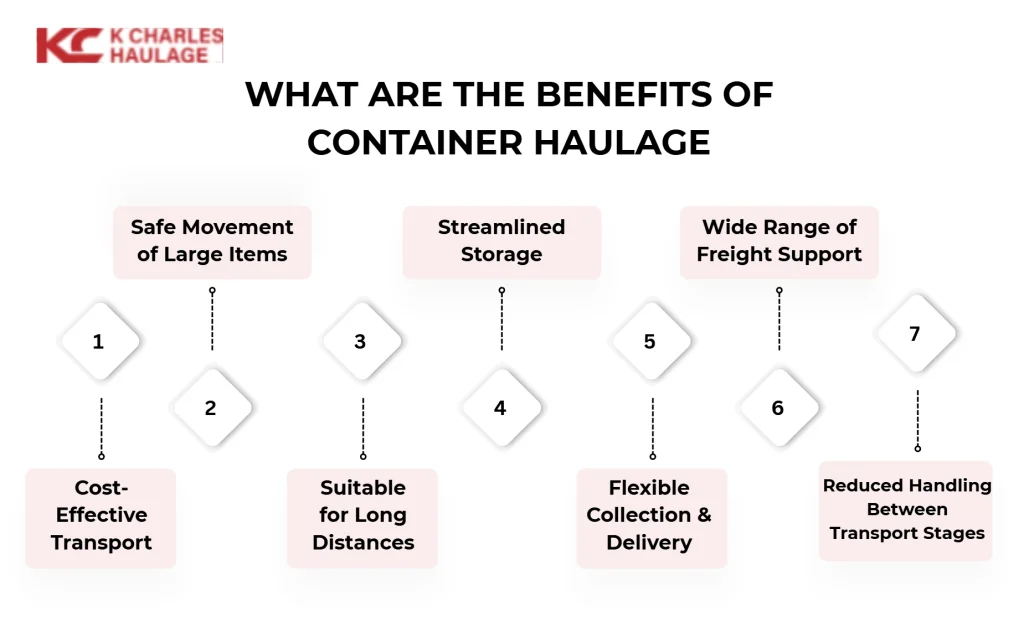
The benefits of container haulage include cost-effective transport, safe movement of large items, long-distance freight transportation, streamlined storage, flexible collection and delivery, support for various cargo types, and reduced handling throughout the transport process. These advantages help businesses improve logistics efficiency, maintain cargo security, and ensure goods are delivered reliably across the supply chain.
7 benefits of container haulage are:
- Cost-Effective Transport: Container haulage reduces transportation costs by moving large volumes of goods within a single container. Standardised container sizes improve loading efficiency, maximise cargo capacity, and minimise handling requirements. This allows businesses to transport freight more economically while maintaining reliable delivery schedules and efficient supply chain operations.
- Safe Movement of Large Items: By using secure, enclosed shipping containers, container haulage protects large, heavy, and high-value cargo in transit. Strong container structures help safeguard goods from weather conditions, theft, and accidental damage.
- Suitable for Long Distances: For businesses transporting freight across regions or countries, container haulage provides an efficient long-distance transport solution. Containers can transfer between ships, trains, and trucks without unloading the cargo. This helps maintain cargo security, reduce delays, and support reliable transportation over extended routes.
- Streamlined Storage: As both a transport and storage unit, a shipping container allows goods to remain securely stored throughout different stages of the logistics process. Containers can hold cargo while awaiting distribution or collection, reducing unnecessary handling and supporting more efficient inventory management.
- Flexible Collection and Delivery: Through customised scheduling options, container haulage enables freight to be collected and delivered according to specific operational requirements. Containers can be moved between ports, depots, warehouses, and customer locations at convenient times.
- Wide Range of Freight Support: With various container types available, container haulage can accommodate a wide range of cargo categories. Businesses use it to transport consumer goods, food products, machinery, chemicals, and oversized equipment. This versatility makes container haulage suitable for a broad range of industries and transportation requirements.
- Reduced Handling Between Transport Stages: Container haulage minimises cargo handling by keeping goods inside the same container throughout much of the journey. Containers can move between ships, trains, and trucks without unloading the contents, reducing the risk of damage, improving cargo security, and supporting more efficient transport operations.
How Much Do Container Haulage Rates Cost in the UK?
Container haulage rates in the UK range from £1.80 to £3.25 per mile, with total transportation costs often falling between £250 and £800+ per container, depending on the shipment requirements. The final cost is influenced by factors such as container size, transport distance, port of collection, delivery location, and site accessibility. For example, transporting a 20ft container from Felixstowe to Birmingham costs around £450, while moving a 40ft High Cube container from Southampton to Leeds costs approximately £650. Businesses should request tailored quotations to obtain accurate pricing based on their specific haulage requirements.
What Are the Common Challenges in Container Haulage?
The common challenges in container haulage are port congestion and delays, loading bay access limitations, driver availability issues, wasted trips, labour and equipment shortages, site hazards, weight restrictions, delivery time windows, and customs or documentation delays. These obstacles can affect transport efficiency, increase operational costs, and disrupt delivery schedules throughout the supply chain.
9 common challenges in container haulage include:
- Port Congestion and Delays: During periods of heavy port activity, container haulage operations experience delays in collection and delivery. Congestion increases waiting times, disrupts transport schedules, and creates additional operational costs for freight movements.
- Loading Bay Access: Limited loading facilities create challenges for container haulage vehicles when collecting or delivering containers. Restricted site layouts and inadequate access points slow loading and unloading operations, affecting overall transport efficiency.
- Driver Availability: A shortage of qualified HGV drivers reduces container haulage capacity and affects transport scheduling. Limited driver availability pressures delivery timelines and increases demand for available transport resources.
- Wasted Trips: Unprepared delivery sites or containers that are not ready for collection result in wasted journeys for container haulage providers. These unnecessary trips increase fuel costs, reduce productivity, and disrupt planned schedules.
- Labour and Equipment Shortages: Insufficient staffing levels or a lack of handling equipment impact container haulage operations. Delays in loading, unloading, and container positioning reduce efficiency and affect the smooth flow of freight.
- Site Hazards: Difficult site conditions create operational risks for container haulage vehicles and personnel. Restricted access routes, uneven surfaces, and active construction areas complicate container deliveries and handling activities.
- Weight Restrictions: Road regulations and vehicle weight limits influence container haulage route planning and transport arrangements. Compliance requirements restrict certain routes and require careful management of container weights before transport.
- Delivery Time Windows: Strict collection and delivery schedules present challenges for container haulage providers. Missing allocated time slots results in delays, rescheduling requirements, and additional charges imposed by ports or customer facilities.
- Customs or Documentation Delays: Delays in customs clearance, missing paperwork, or incorrect documentation directly affect container haulage operations. Containers remain held at ports or terminals until all requirements are satisfied, extending transit times, disrupting delivery schedules, and increasing storage or demurrage costs.
How Should You Choose a Container Haulage Provider?
You should choose a container haulage provider based on its industry experience, service coverage, fleet and equipment, regulatory compliance, tracking capabilities, reliability, pricing transparency, customer support, and ability to handle specialised transport requirements. Evaluating these factors helps ensure your containers are transported safely, efficiently, and in accordance with your operational requirements.
When choosing a container haulage provider, consider the following factors:
- Industry Experience: Select a provider with experience in handling the type of containers and cargo you transport.
- Service Coverage: Ensure the container haulage provider operates in the locations and routes required for your shipments.
- Fleet and Equipment: Check whether the provider has suitable vehicles, trailers, and handling equipment for your transport requirements.
- Regulatory Compliance: Verify that the provider complies with transport regulations, safety standards, and licensing requirements.
- Tracking and Communication: Look for providers that offer shipment tracking and regular updates throughout the transport process.
- Reliability and Delivery Performance: Review the provider’s track record for on-time collections and deliveries.
- Pricing and Transparency: Compare quotations and ensure costs, surcharges, and service terms are clearly explained.
- Customer Support: Choose a provider that offers responsive customer service and effective problem resolution.
- Specialised Transport Capabilities: Confirm the provider can handle refrigerated, hazardous, oversized, or other specialised cargo if required. A reliable haulage provider should also match the equipment and compliance needs of those cargo types.
Is Container Haulage Right for You?
Yes, container haulage is the right solution if you need to transport containerised goods securely and efficiently between ports, warehouses, distribution centres, and customer locations. It is particularly suitable for businesses that move high-volume shipments, require long-distance transportation, or rely on intermodal freight networks involving road, rail, and sea transport. Container haulage also supports a wide range of cargo types, providing cost-effective, secure, and reliable freight movement throughout the UK and the European supply chain.