Skip to content
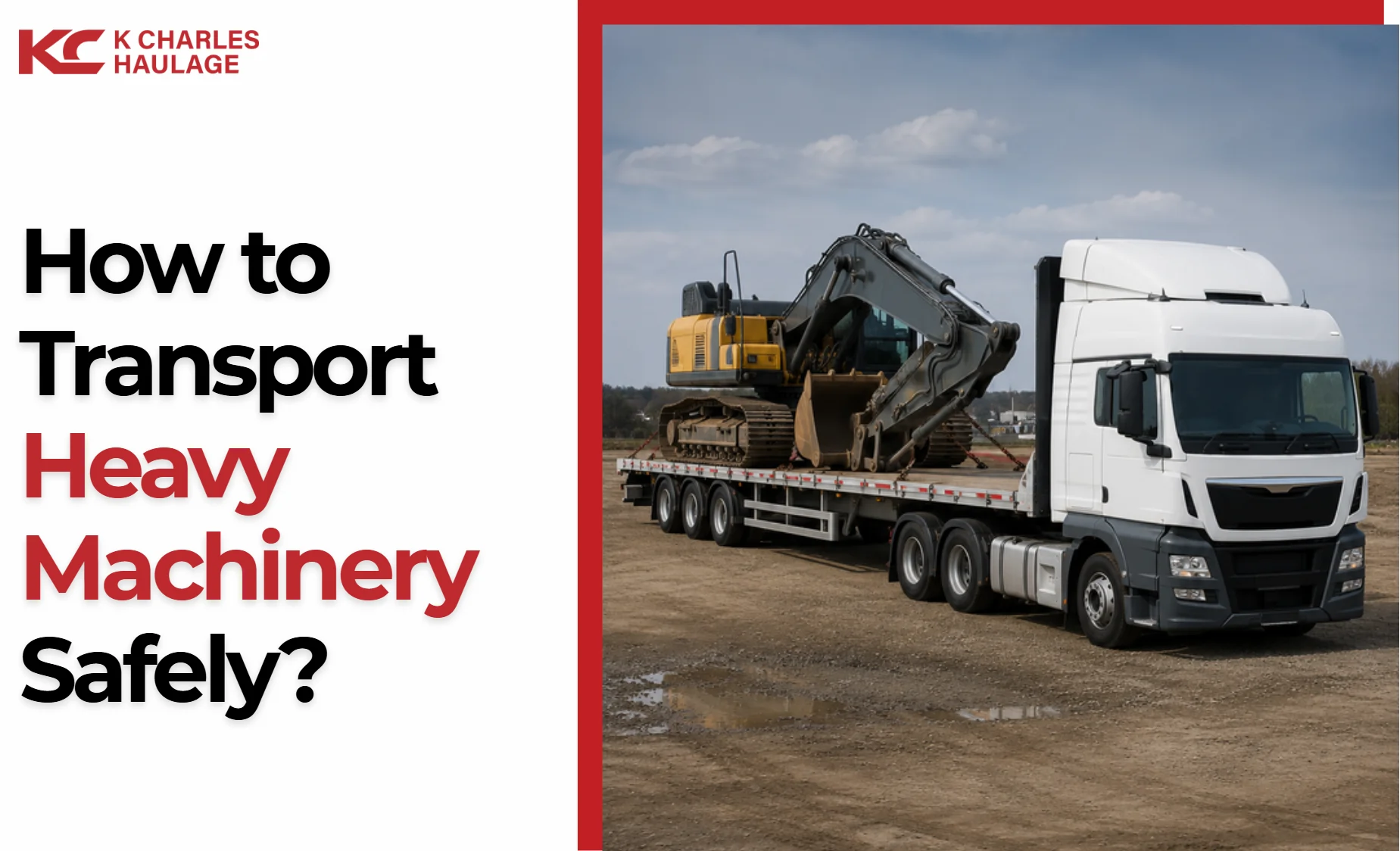
To transport heavy machinery safely, assess requirements, select the right vehicle, plan the route, check permits, prepare and load the machinery, secure the load, inspect before departure, monitor during transport, and unload safely. Unloading heavy machinery safely requires preparing the unloading area, confirming load stability, releasing restraints, positioning ramps, controlling machine movement, and keeping the unloading path clear to prevent accidents and equipment damage.
Several factors influence heavy machinery transportation safety, including machinery size and weight, centre of gravity, vehicle capacity, restraint condition, route and road conditions, weather, driver experience, equipment condition, loading and unloading sites, and regulatory compliance. In particular, harsh weather can reduce traction and visibility, destabilise oversized loads, affect braking and steering, strain components, shift cargo, restrict routes, reduce transport speeds, and delay delivery.
Understanding what qualifies as heavy machinery also helps determine suitable transport requirements and safety measures. Avoiding common mistakes involving vehicle selection, machine measurements, route planning, permits, load positioning, restraints, inspections, monitoring, and unloading supports safe and compliant machinery transportation.
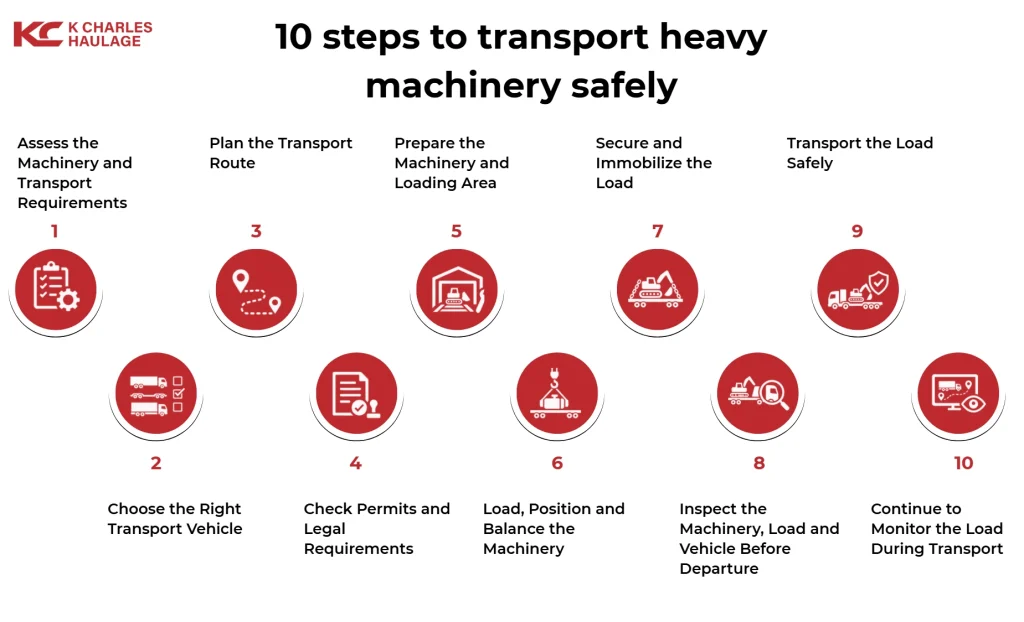
10 steps to transport heavy machinery safely are:
- Assess the Machinery and Transport Requirements
- Choose the Right Transport Vehicle
- Plan the Transport Route
- Check Permits and Legal Requirements
- Prepare the Machinery and Loading Area
- Load, Position and Balance the Machinery
- Secure and Immobilize the Load
- Inspect the Machinery, Load and Vehicle Before Departure
- Transport the Load Safely
- Continue to Monitor the Load During Transport
- Assess the Machinery and Transport Requirements
To begin, record the machine’s weight, width, height, equipment condition, pickup location, and drop-off location because these details determine transport requirements. Check whether the machinery can roll onto a trailer or requires lifting equipment for loading. Identify oversized or overweight characteristics that may affect route planning or permits. A detailed assessment helps the transport company select suitable equipment and prepare a safe transport plan.
- Choose the Right Transport Vehicle
Select a transport vehicle, such as a low loader, low loader trailer, flat bed, or specialist low loader, that can safely carry the machinery’s size and weight. Compare the load requirements with the vehicle’s capacity and configuration. Check the trailer deck, loading angles, anchor points, and tractor unit before confirming the vehicle. A mismatched transportation vehicle can affect stability, manoeuvrability, and weight distribution during heavy equipment transport. The right vehicle provides adequate support for the complete load.
- Plan the Transport Route
After that, map a route from the pickup site to the drop-off site before moving heavy machinery. Check road conditions, traffic, width restrictions, height restrictions, turning areas, and potential hazards that can restrict the transport vehicle. Consider whether bridges, narrow roads, construction sites, or access points can accommodate the loaded trailer. Route planning also helps the transport company anticipate delays and identify any need for an escort vehicle. A complete route plan supports smoother transportation.
- Check Permits and Legal Requirements
Once the route is planned, check the laws, regulations, restrictions, and permits that apply to the machinery transport. Under STGO rules, loads exceeding 44,000 kg, 2.9 m wide, or 18.65 m long can fall within Abnormal Indivisible Load requirements. Provide 2 clear working days’ notice for loads up to 80,000 kg and 5 working days’ notice for loads from 80,000 kg to 150,000 kg. Loads exceeding 150,000 kg, 6.1 m wide, or 30 m long require a Special Order application at least 8 weeks in advance.
- Prepare the Machinery and Loading Area
Before loading begins, prepare the heavy machinery and loading area so the equipment can move onto the trailer safely. Inspect tyres, hydraulic hoses, cylinders, hitches, and other relevant components for visible problems. Keep the loading surface clean, dry, clear, and even to maintain machinery stability. Position the ramps correctly and keep the loading path clear of equipment and hazards. Proper preparation helps prevent unexpected movement during loading.
- Load, Position and Balance the Machinery
Next, load the machinery onto the trailer using controlled movement. Roll, lift, or move the machine according to its size, equipment condition, loading angles, and trailer configuration. Position the load so its weight is distributed correctly across the trailer deck and does not create unstable front, rear, or sideways movement. Pay close attention to the centre of gravity because poor positioning can affect stability during acceleration, braking, and turning. Reposition the machinery when necessary before securing it.
- Secure and Immobilise the Load
After that, secure the heavy machinery with load restraints that match the load and available anchor points. Use certified chains, straps, hooks, binders, or other applicable restraints with adequate working load limits. Fasten the machinery to suitable trailer hitch points or anchor points and apply correct tension. Check that the restraints restrict forward, rearward, upward, and sideways movement. Loose or weak restraints can allow heavy cargo to shift, bounce, or dislodge during transport. Properly secured machinery maintains load stability throughout the journey, reduces the risk of transport incidents, and helps ensure compliance with safe heavy machinery transportation requirements.
- Inspect the Machinery, Load and Vehicle Before Departure
Once the load is secure, perform a thorough pre-departure inspection of the machinery, transport vehicle, and restraint system. Check tyre pressure, wheels, brake lights, brakes, parking brake, hitches, hydraulic hoses, chains, straps, binders, and anchor points. Confirm that the load remains correctly positioned and that each restraint maintains adequate tension. Inspect the trailer bed and surrounding equipment for loose components that could move during transit. Completing these inspections before departure helps confirm that the load is stable, the equipment is operational, and the transport can proceed safely.
- Transport the Load Safely
When transport begins, drive the loaded vehicle according to the route plan, road conditions, traffic, machinery weight, and load stability. Accelerate, brake, and turn in a controlled manner because sudden vehicle movement can place additional force on load restraints and affect the centre of gravity. Maintain adequate manoeuvrability around restricted roads, junctions, and access points. Qualified drivers should remain familiar with the transport vehicle and heavy cargo throughout the journey. During transit, continue checking the load rather than assuming the original restraint condition will remain unchanged.
- Continue to Monitor the Load During Transport
During transport, monitor the machinery and load restraints at suitable stopping points, as road movement can change tension or cause the load to shift. Check certified chains, straps, binders, anchor points, and machinery position for loose or mismatched conditions. Stop safely if restraints require tightening or the machinery needs repositioning. Continue checking road conditions, traction, traffic, and load stability throughout the journey. Finally, once the vehicle reaches the drop-off site, prepare the machinery for safe and controlled unloading.
Unload the Machinery Safely
- Prepare the unloading area
First, inspect the unloading area and confirm the surface is clean, dry, clear, and even. Remove equipment or other hazards that could restrict machinery movement. Check that there is adequate space for the trailer, ramps, and machine. A properly prepared drop-off site provides a stable surface and allows the machinery to move safely during unloading.
- Confirm load stability
Check the machinery’s position, weight distribution, centre of gravity, and visible movement whilst it remains on the trailer. Make sure the machine is secure and does not shift forward, rearward, or sideways. If the load has moved during transport, reposition or stabilise the machinery before continuing with the unloading process.
- Release restraints
Once load stability is confirmed, release the certified chains, straps, hooks, and binders in a controlled sequence. Avoid standing where a loose restraint or shifting machine could create a hazard. Release tension carefully and inspect the machinery after each restraint is removed. Controlled restraint removal helps prevent sudden movement before the machine is ready to leave the trailer.
- Position ramps
Check that each ramp is secure, aligned with the machinery, and suitable for the machine’s size and weight. Keep the loading angles appropriate for controlled movement. Correct ramp positioning provides a stable path between the trailer and unloading surface and reduces unwanted movement during unloading.
- Control machine movement
Then, move the machinery down the ramps slowly and under controlled conditions. Avoid sudden acceleration, braking, or turning that could affect stability or cause sideways movement. A qualified operator should maintain control throughout unloading and stop if the machine becomes unstable. Controlled movement helps the machinery travel safely from the trailer to the prepared unloading area.
- Keep the unloading path clear
Finally, keep the entire unloading path clear whilst the machinery moves away from the trailer. Prevent people, vehicles, equipment, and other hazards from entering the movement area. Continue monitoring the machine until it reaches a stable final position. A clear unloading path gives the operator adequate space to manoeuvre and completes the heavy machinery transportation process safely.
What Factors Affect the Safety of Heavy Machinery Transportation
Factors affecting heavy machinery transport safety include load size and weight, weight distribution, vehicle capacity, restraints, route and weather conditions, driver experience, equipment condition, site conditions, and regulatory compliance. Each component affects load stability, vehicle control, and the safe transport of heavy machinery.
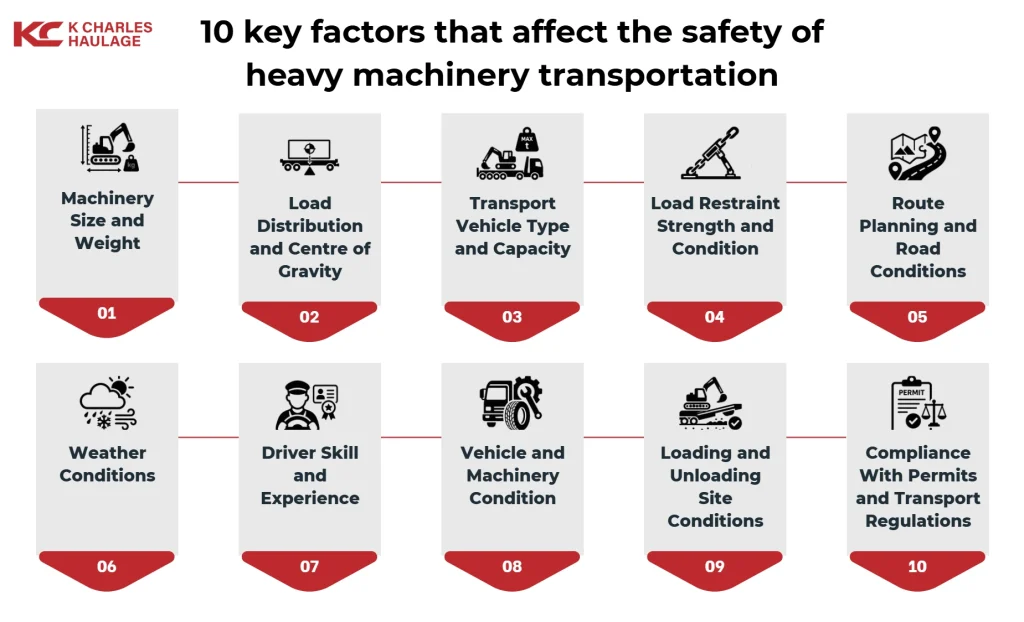
10 key factors that affect the safety of heavy machinery transportation are:
- Machinery Size and Weight
Machinery size and weight affect transport safety by determining load stability, vehicle suitability, manoeuvrability, and route access. A large excavator weighing 40 tonnes requires a heavy-duty low loader trailer with sufficient payload capacity and dimensions to support its weight, width, and height. Accurate measurements of weight, width, height, and length help select a suitable trailer and identify restrictions before transportation begins.
- Load Distribution and Centre of Gravity
Uneven load distribution or a high centre of gravity affects heavy machinery transport safety by reducing stability during acceleration, braking, and turning. The machinery may lean or shift forward, rearward, or sideways, increasing the risk of uncontrolled movement. Correctly positioning and balancing the machinery across the trailer deck helps maintain stability and keeps the load secure throughout transportation.
- Transport Vehicle Type and Capacity
For heavy machinery transport, the vehicle type and capacity affect safety because they determine whether the vehicle can support and control the machine’s weight and dimensions. A low loader or specialist low loader must have adequate capacity for the load. Using a mismatched vehicle can cause poor weight distribution, unstable loading angles, and reduced manoeuvrability, increasing the risk of unsafe machinery movement during transport.
- Load Restraint Strength and Condition
Weak, loose, damaged, or mismatched chains and straps can allow heavy machinery to shift or dislodge during braking, acceleration, or turning, affecting transport safety. Certified chains, suitable anchor points, adequate working load limits, and correct tension help immobilise the machinery and restrict unwanted movement throughout transport.
- Route Planning and Road Conditions
Narrow roads, low bridges, weak structures, restricted access, or poor road conditions can affect vehicle control and manoeuvrability, reducing the safety of heavy machinery transport. A detailed route plan helps heavy haulage drivers identify these hazards in advance and select roads suitable for the machinery and transport vehicle.
- Weather Conditions
Rain, snow, ice, fog, and strong winds can reduce traction and visibility, make braking and steering more difficult, and destabilise oversized or high-profile loads, affecting heavy machinery transport safety. Harsh weather can also increase the risk of load movement during transit. Drivers should reduce speed or stop when weather conditions prevent safe vehicle control or load stability.
- Driver Skill and Experience
An experienced, well-qualified driver can adjust acceleration, braking, turning, and speed according to the machinery weight, route, traffic, and weather conditions. Limited experience can increase the risk of incorrect manoeuvres, particularly when operating loaded vehicles through restricted roads or difficult access points.
- Vehicle and Machinery Condition
Worn tyres can reduce traction, whilst defective brakes can affect controlled stopping, reducing the safety of heavy machinery transport. Problems with wheels, hitches, hydraulic hoses, or cylinders can also create hazards during transit. Inspecting the transport vehicle and machinery before departure helps identify unsafe conditions and address mechanical problems before heavy machine transport begins.
- Loading and Unloading Site Conditions
Loading and unloading site conditions affect heavy machinery safety by influencing traction, machinery stability, and controlled movement. An uneven, slick, or obstructed surface can destabilise machinery whilst moving onto or off the trailer. Clean, dry, clear, and even surfaces provide safer conditions for positioning ramps and controlling heavy machinery during loading and unloading.
- Compliance With Permits and Transport Regulations
Missing permits, required notifications, or compliance with route restrictions can make heavy machinery transport unsafe and non-compliant. Checking the applicable regulations before departure ensures the vehicle, load, route, and transport arrangements meet the legal requirements for safe heavy machinery transportation.
How Does Harsh Weather Affect Heavy Haulage?
Harsh weather affects heavy haulage by reducing traction and visibility, destabilising loads, limiting vehicle control, increasing load shifting, restricting routes and speeds, and delaying loading or delivery. These conditions can make it harder for drivers to maintain vehicle control and keep heavy machinery stable throughout transport.
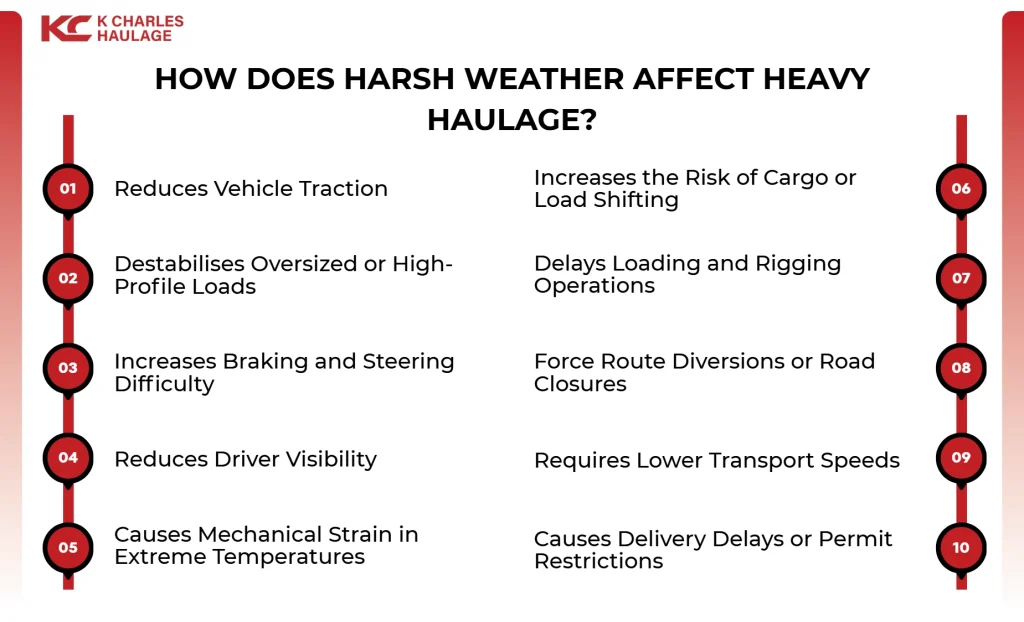
Harsh weather affects heavy haulage in the following ways:
- Reduces Vehicle Traction
Rain, snow, and ice reduce tyre grip between the transport vehicle and road surface. This creates a greater risk for heavy machinery transport because loaded trailers have higher axle weights and require longer stopping distances. Wet asphalt can increase stopping distances by up to 40%, while ice can increase them by up to 300%. For heavy transport vehicles, operators should increase following distances to 8–10 seconds in wet or freezing conditions, maintain suitable tyre tread depths, reduce speed, and avoid sudden braking or steering movements on slippery surfaces.
- Destabilises Oversized or High-Profile Loads
Strong winds can create sideways forces on oversized machinery with large exposed surfaces, such as excavators, industrial equipment, and construction machinery. Loads with a high centre of gravity are more vulnerable to movement during crosswinds, which can affect trailer stability and steering control. Transport operators should monitor wind conditions during oversized load movements. Sustained winds of 35 mph (56 km/h) can require reduced speeds, while 45 mph (72 km/h) may require stopping high-profile loads. Avoid using tarps on open oversized loads in high winds to prevent sail effects.
- Increases Braking and Steering Difficulty
Heavy machinery transport vehicles already require controlled braking due to increased gross weight. Wet, icy, or snow-covered roads can further increase stopping distances and reduce steering response. Drivers must master auxiliary braking systems, being especially careful with retarder and Jake brake usage on slick surfaces, as high-stage auxiliary braking on ice can easily induce drive-wheel lockup or a jackknife
- Reduces Driver Visibility
Harsh weather obscures route hazards, traffic patterns, and overhead or width restrictions, complicating the transport of abnormal loads that require millimeter-level positioning precision. Poor visibility also disrupts escort vehicle coordination. Operations should implement strict visibility minimums, requiring front and rear escort vehicles to activate synchronized amber strobe arrays and high-intensity LED work-facing clearance lights if visibility drops below 100 meters (approx. 330 feet).
- Causes Mechanical Strain in Extreme Temperatures
Extreme temperatures can stress tyres, braking systems, hydraulics, and securing equipment. Below -15°C (5°F), low-temperature-rated Grade 80 or Grade 100 chains may be required due to reduced steel toughness. Above 35°C (95°F), operators should monitor tyre pressure changes and inspect hubs regularly to manage heat-related risks. Regular equipment checks help identify temperature-related issues before they affect transport safety.
- Increases the Risk of Cargo or Load Shifting
Strong winds, sudden braking, or movement on slick roads can increase the risk of heavy machinery shifting on the trailer. Load movement can change weight distribution and reduce stability during transport. Certified chains, straps, binders, and anchor points should maintain correct tension. The load should be stopped and inspected if harsh weather causes unexpected machinery movement.
- Delays Loading and Rigging Operations
Wet, muddy, or frozen ground can become weak and unstable, increasing the risk of heavy haulage trailers, multi-axle vehicles, or SPMTs sinking under heavy loads. These conditions can make it more difficult to move machinery onto trailers, position ramps, attach certified chains, and apply restraints correctly. Operators should use load-spreading materials, such as crane mats or timber pads, under outriggers and support areas to keep the equipment stable.
- Force Route Diversions or Road Closures
Flooding, heavy snow, and structural storm damage frequently force unexpected road closures and emergency detours during heavy haulage operations. Because standard consumer GPS units do not factor in the height, width, or weight restrictions of abnormal loads, drivers must never accept dynamic rerouting from generic navigation apps. Drivers must manually verify all detour paths against the state or provincial over-dimensional permit network and bridge clearance databases to ensure the loaded transport vehicle can safely navigate the alternative path.
- Requires Lower Transport Speeds
Reduced traction, limited stability, and poor visibility make normal transport speeds unsafe in harsh weather. Operators should reduce speed based on conditions, such as limiting speeds to 45 mph (70 km/h) or 15 mph below the limit in heavy rain, reducing to 30 mph (50 km/h) in snow or slush, and stopping transport in areas affected by black ice until conditions improve. Regular weather monitoring helps operators make safe decisions before and during the journey.
- Causes Delivery Delays or Permit Restrictions
Adverse weather can delay heavy machinery deliveries when flooding, road closures, poor visibility, or reduced transport speeds prevent safe movement. It may also restrict access to approved routes or affect planned transport arrangements. Before continuing the journey, check weather and route restrictions to confirm the load can travel safely and remain compliant with applicable permit conditions.
What Qualifies as Heavy Machinery?
A machine qualifies as heavy machinery when its size, weight, mobility, or handling requirements make standard transportation unsuitable and require controlled movement or specialist transport equipment. Supplied sources commonly describe machinery weighing over 5,000 pounds (about 2,268 kg) as heavy equipment, although classification can also depend on its design, purpose, and operating requirements.
- Weight and size: Heavy machinery commonly weighs more than 5,000 pounds, with some machines weighing several hundred tonnes.
- Design purpose: These machines perform demanding tasks such as digging, lifting, grading, earthmoving, and moving heavy materials.
- Operating requirements: Heavy machinery can require specialist training, licences, or certifications depending on the machine and applicable regulations.
Common examples of Heavy Machinery
Common examples of heavy machinery include excavators, bulldozers, cranes, backhoes, and loaders. Excavators handle digging and earthmoving, whilst bulldozers push soil, rock, and other heavy materials. Cranes lift heavy loads vertically and horizontally on construction and infrastructure sites. Backhoes support digging and trenching, whilst loaders move and load materials around construction, agricultural, and industrial sites.
What Are the Common Heavy Machinery Transportation Mistakes to Avoid?
Common heavy machinery transport mistakes include using the wrong vehicle, incorrect load measurements or balancing, unsafe routes, missing permits, inadequate restraints, skipped inspections, poor load monitoring, and unsafe loading or unloading. These errors can reduce load stability, compromise vehicle control, cause machinery damage, and create legal or safety risks during transport.
10 common heavy machinery transportation mistakes to avoid are:
- Choosing the Wrong Transport Vehicle
Using a transport vehicle with inadequate capacity or an unsuitable trailer configuration can reduce load stability and manoeuvrability. Match the machinery’s weight and dimensions with a suitable low loader or specialist transport vehicle before loading.
- Misjudging the Machinery’s Size or Weight
Incorrect machinery measurements can lead to the wrong vehicle, route, restraints, or transport arrangements being selected. Record the machine’s weight, width, height, and length accurately before planning heavy machinery transportation.
- Planning an Unsafe or Restricted Route
An unsafe route can expose the loaded vehicle to low bridges, weak structures, narrow roads, or restricted access. Check the complete route in advance and confirm that it can accommodate the machinery and transport vehicle safely.
- Missing Required Permits or Legal Clearances
Missing permits, notifications, or legal clearances can make an abnormal load movement non-compliant and cause transport delays. Check applicable UK transport requirements and complete the required notifications or approvals before the planned journey.
- Loading on an Unsafe or Unstable Surface
Loading machinery on an uneven, slick, or unstable surface can reduce traction and cause uncontrolled machine movement. Use a clean, dry, clear, and even loading area that provides adequate space for the trailer, ramps, and machinery.
- Positioning or Balancing the Load Incorrectly
Poor load positioning can create uneven weight distribution or an unsuitable centre of gravity, reducing stability during braking and turning. Position and balance the machinery correctly across the trailer deck before applying the load restraints.
- Using Inadequate Load Restraints
Weak, loose, damaged, or mismatched restraints can allow heavy machinery to shift or dislodge during transport. Use suitable certified chains, straps, binders, and anchor points with adequate working load limits and correct tension.
- Skipping the Pre-Departure Safety Inspection
Skipping the final inspection can leave problems with tyres, brakes, hitches, restraints, or machinery components unidentified before departure. Inspect the vehicle, machinery, load position, and restraint system before starting the journey.
- Failing to Monitor the Load During Transit
Load restraints can loosen, and machinery can shift as the transport vehicle travels over changing road conditions. Check the load at suitable stopping points and tighten restraints or reposition the machinery when movement is identified.
- Unloading Before Confirming Load Stability
Releasing load restraints before confirming load stability can allow the machinery to move unexpectedly on the trailer. Confirm the equipment’s position, weight distribution, and centre of gravity before loosening the restraints and starting the unloading process.
Outro statement
Safe heavy machinery transportation requires careful planning, suitable equipment, secure loading, and regular checks throughout the journey. Working with a specialist heavy haulage service can help avoid common transport mistakes and support safe, compliant machinery movement from the pickup site to the final destination.